Yoshitomo Nara
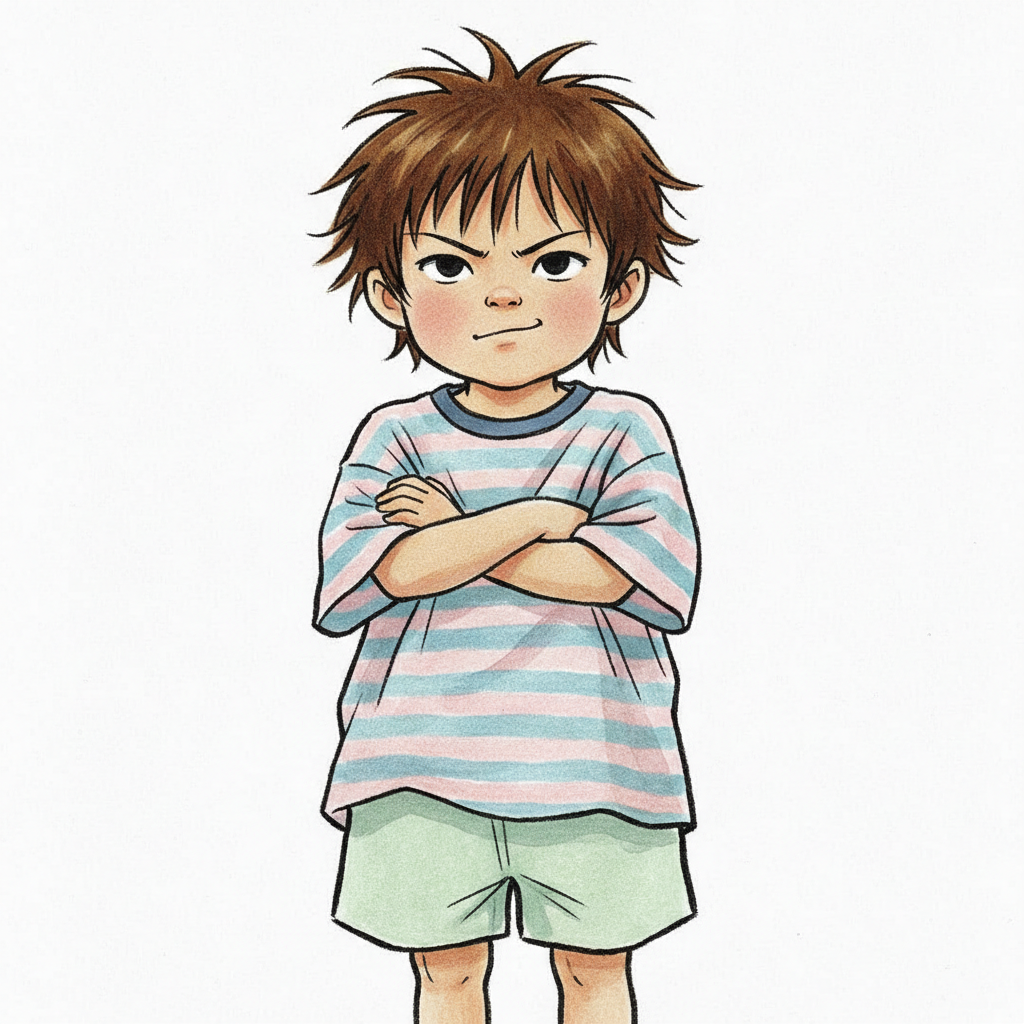
Yoshitomo Nara has painted the archetypal gaki for over thirty years. His child figures have round heads, narrow eyes, and tight mouths. Their expression is defiance held back rather than anger shown. Nara rarely uses the word gaki in titles, but the register is the same.
Gaki no Tsukai
"Downtown no Gaki no Tsukai ya Arahende!", usually shortened to Gaki no Tsukai, is a Japanese comedy variety show on air since 1989. The title translates loosely to "this isn't a kid's errand." The show has helped normalize the word in daily speech over several decades.
Crayon Shinchan
Shinnosuke Nohara, the five-year-old protagonist of Crayon Shinchan, is a canonical gaki: rude, unfiltered, affectionate to his parents, chaotic in public. The manga and anime have run since 1990 and shaped the modern image of the word.
Urusei Yatsura
Rumiko Takahashi's Urusei Yatsura (うる星やつら, 1978-1987) centers on a neighborhood of kids causing large-scale trouble. It helped fix the gaki archetype in 20th-century manga.
Everyday material culture
- Signs
- Children's programs, after-school clubs, and comedy posters often use ガキ in katakana. Reads as playful.
- Streetwear
- Used on T-shirts and hoodies as a self-applied label.
- Graffiti
- "GAKI" as a tag appears often enough in Japanese cities to be its own small archetype.
- Variety comedians
- Self-describing as "a gaki who never grew up" is a common comedian bit.
Not the contemporary meaning
The word has a Buddhist ancestor, the hungry ghost of the gaki-dō realm, but that meaning is not what appears in cafés, variety scripts, or conversations between siblings. It belongs to temple paintings and religious texts. See meaning for etymology.